


2025 was not a downturn – it was a structural reset
- PR Worx Admin
- Dec 12, 2025
- 5 min read
By Keenin Schofield, Managing Director – Bartglo Resources
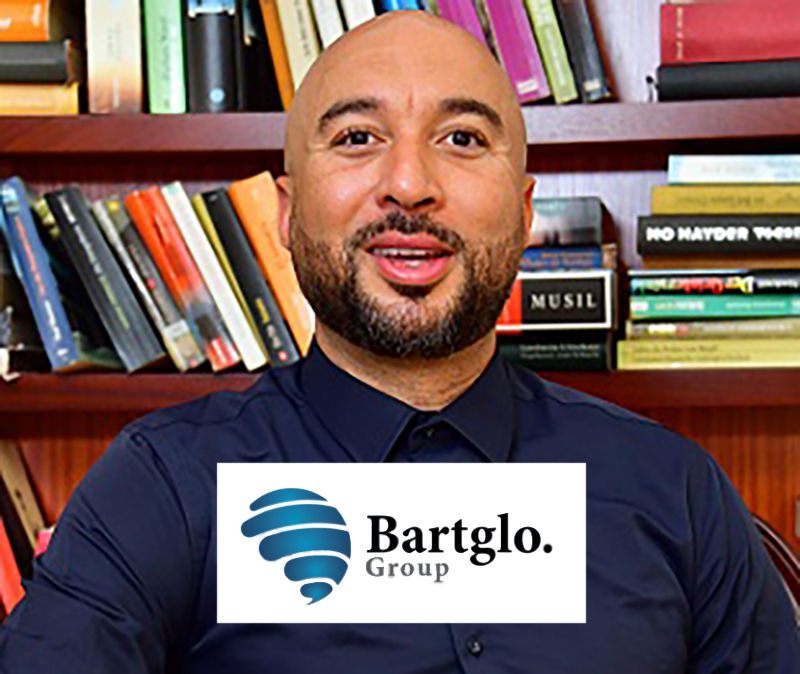
This has been a year of sharp contradictions for Southern Africa’s mining and minerals sector. On paper, the industry looks resilient, as PwC’s SA Mine 2025 report recorded a 28% rise in market capitalisation and reaffirmed mining’s contribution of around 6% to South Africa’s GDP. But these figures mask an industry undergoing a profound recalibration.
Behind the headline numbers, mining slipped into a technical recession in the first quarter, contracting as much as 4%. Volatility defined 2025, prompting companies to tighten costs, defer capital expenditure, and lean into digital optimisation and renewables to stabilise operations.
The real story of 2025 is therefore not whether mining expanded or contracted, but how far the sector’s foundations shifted. As someone operating across commodities, logistics, energy, and infrastructure – and as a stakeholder in coal and chrome through Khanyisela Resources and Chrisilda Chrome – I see four forces that defined the year: the rise of critical minerals, the primacy of logistics, the importance of patient capital, and the reframing of social licence as a commercial necessity.
The critical minerals decade arrived faster than expected
With demand for critical minerals such as copper, nickel, lithium, and rare earths set to nearly triple by 2030 and quadruple by 2040, BDO’s Annual Mining Report 2025 demonstrates why urgency has replaced speculation. If 2023 and 2024 were about forecasting the energy transition, 2025 became about implementation.
South Africa released its own critical minerals strategy, highlighting the need to secure a place in global value chains rather than remaining a supplier of raw ore. Similarly, Eswatini took bold steps of its own, deploying AI-driven geological mapping to identify high-value deposits including lithium, tantalum, and nickel, issuing exploration licenses, and forming partnerships with leading geoscience institutions.
This doesn’t diminish the value of traditional minerals such as coal or chrome, as both remain essential for energy stability, employment, and export revenue. But 2025 did see a marked shift in investor sentiment.
Conversations that once centred on production volumes and pricing now focus on supply chain resilience, strategic partnerships, and multi-mineral portfolios. Even coal and chrome investors increasingly want to understand how today’s income-generating commodities can be used to fund exploration and infrastructure for tomorrow’s critical minerals.
This year demonstrated that traditional commodities must finance the transition, not be sacrificed for it.
Logistics became the real orebody
If 2025 taught the sector one lesson, it’s that Africa’s mineral potential will be unlocked by both geology and logistics. South Africa’s mineral revenues could have been materially higher if rail and port systems operated at design capacity.
Years of under-investment have capped export volumes and limited the rail and port infrastructure upgrades needed to reduce costs, improve efficiency, and enhance the country’s export competitiveness in the global market. Logistics has become the greatest risk and opportunity in the value chain.
Across the region, the bottleneck is unmistakable. Mines are producing, but getting minerals from pit to port remains the most expensive and unpredictable. Companies with secure rail slots, storage hubs, blending facilities, and cross-border coordination mechanisms enjoyed a far greater advantage in 2025 than incremental production gains could deliver.
As such, the next winners in African mining will be determined by the quality and speed of their trade-lanes, affirming that logistics is not an auxiliary cost centre but a strategic asset. Investors increasingly recognise this, and far more public-private corridor investment is expected in 2026 and beyond. Production is no longer the bottleneck. Movement is.
Communities, safety, and social licence moved to the forefront
A less visible yet equally significant shift this year was the elevation of social licence to a board-level risk category. Illegal mining surged, extending into previously unaffected commodities and forcing sustained coordination between government, law enforcement, and mining companies.
BDO’s research also shows that ESG performance, safety data, and community integration now directly influence investor decisions, insurance exposure, and market access. For operators, this means community partnerships must be engineered into the project economics, not bolted on after the fact. From closure planning and land rehabilitation to procurement and training, companies with meaningful community alignment faced fewer disruptions and ran more stable operations in 2025.
Eswatini: the rising contender
Eswatini’s mining sector may be small, but its 2025 trajectory suggests a long-term strategic play. Through its national mineral mapping programme and strategic push to attract investment into gold, coal, quarry stone, and high-value green minerals, the country is signalling its ambition. Its partnership with South Africa’s Council for Geoscience and the deployment of AI-enabled exploration tools indicate a modernised approach that could accelerate the development of new mining clusters.
For regional operators, this unlocks the potential of integrated SADC value chains, marked by cross-border beneficiation, shared logistics, and harmonised policy frameworks across South Africa, Eswatini, and Mozambique. Mining in this region will increasingly be defined by corridor economics.
Closing the year and opening a new chapter
This year has been a pivot point, as operators have discovered that resilience now comes from the integration of traditional and emerging critical minerals, of mining with logistics, of communities into project economics, and of national markets into regional value chains.
Mining’s next decade in Southern Africa will therefore be defined by connectivity – of infrastructure, of minerals, of markets, and of people. That is where the real opportunity lies, and that is the model we are building at Bartglo Resources.
ENDS
Boilerplate/bio:
Keenin Schofield is an Africa-focused business leader with more than 17 years’ experience in commodities, mining, logistics, energy, and infrastructure across Africa. He is the Managing Director of Bartglo Resources (Pty) Ltd, a South African investment company that owns and supports a portfolio of businesses across the mining, commodity trading, logistics, energy and technology sectors.
Schofield also leads Khanyisela Resources and Chrisilda Metals Group, which are coal and Chrome/PGM focused mining and trading platforms, and is a director or shareholder in a broader ecosystem of mineral, logistics and infrastructure companies - including Khanyisela Mineral Traders, Chrisilda Chrome, Valanga Mining, Quality Beneficiation Solutions, Southern Bulk Rail Terminals among others.
Together, these entities give him a hands-on perspective across the full value chain, from resource ownership and mineral trading to bulk logistics, terminals, and cross-border corridor development.
Under his leadership, Bartglo Resources has backed initiatives beyond South Africa’s borders, such as the Academic City University–Arima Resources partnership in Ghana, which funds research and innovation to combat illegal mining using AI-enabled drones, smart monitoring systems, and digital compliance tools.
Schofield’s work consistently focuses on long-term, infrastructure-led value creation: integrating traditional commodities with emerging critical-minerals opportunities, and building regional value chains that link Southern African resources to global markets.


Comments